

Dr. Rafael Garduno
Research Interests
The Legionella research project
Legionella as a waterborne pathogen
Legionella pneumophila is best known through the disease it causes (Legionnaires' disease pneumonia), mainly because outbreaks of Legionnaires’ disease are often reported in the news and make the front pages of newspapers. However, the natural history of L. pneumophila indicates that it is primarily an intracellular bacterial parasite of freshwater and soil amoebae, and some of its close relatives even have established obligate symbiotic relationships with freshwater amoebae. So… how did Legionella make the leap from amoeba to humans?
There are two parts in the answer to this question. The first part is “opportunity”. Legionella would not have made close contact with the human host in the absence of modern technology. Therefore, in this case we have been the victims of our own inventions to improve comfort. By creating potable water systems, showers, air conditioners, cooling towers, hot tubs, etc., we have created water environments where Legionella thrives, and have given Legionella the opportunity to reach the human lung via contaminated aerosols. When L. pneumophila is accidentally aerosolized into the lungs of susceptible humans, it infects defense cells known as alveolar macrophages (http://www.nature.com/nrmicro/animation/index_mf.html), which leads to the second part of the answer: Whatever mechanisms Legionella developed to infect amoebae, work also in mammalian cells. That Legionella uses the same mechanisms to infect amoeba and human cells is also inferred by the fact that whether infecting human cells or amoebae, L. pneumophila absolutely requires its Dot/Icm type IV secretion system and follows a remarkably conserved sequence of intracellular events that condition the intracellular environment to allow bacterial growth.
It appears that L. pneumophila exploits a well-conserved process in eukaryotic cells. That this process is common to many eukaryotic cell lineages implies that it was present in a common ancestor to present day eukaryotes, and therefore, it must be an ancient, fundamental process. The factors used by Legionella to exploit such process would also likely be ancient. So, we are looking at the potential contributions of the Hsp60 chaperonin (that we call HtpB) to the pathogenesis of L. pneumophila. Chaperonins are ancient proteins common to all cellular forms of life and play an essential role in folding. Chaperonins are highly conserved proteins, but some diversity does exist among them in terms of function. Some bacterial chaperonins have enzymatic activities other than protein folding, and some behave as toxins or attachment factors.
Chaperonin research
HtpB and intracellular infections
This research is based on the hypothesis that the L. pneumophila chaperonin known as Hsp60 is involved in preparing the intracellular environment for bacterial growth. We have previously shown that HtpB is abundantly produced and released by intracellular L. pneumophila, and now we are studying the effects that this intracellularly produced HtpB may have in the host cell. The immediate objective is to identify the mechanism by which HtpB orchestrates intracellular changes in the host cell. For this, we are looking at HtpB secretion mechanisms used by L. pneumophila to target Hsp60 to the host cell, the intracellular trafficking of HtpB-coated latex beads, and at specific effects of recombinant HtpB in yeast and mammalian cells.
Molecular partners of HtpB
HtpB is a heat shock protein not supposed to reside on the bacterial cell surface. However, I have found that this protein both is prominently displayed on the surface of L. pneumophila and mediates invasion of non-phagocytic epithelial cell lines like HeLa, implying that HeLa cells have receptors for Hsp60. The identification of host cell receptors specific for bacterial chaperonins is being pursued. From the immunology point of view, receptors for heat shock proteins have been identified. We also would like to know what molecules interact with the intracytoplasmic pool of HtpB. For this we are conducting yeast-two-hybrid and immunoprecipitation assays.
L. pneumophila differentiation and developmental cycle research
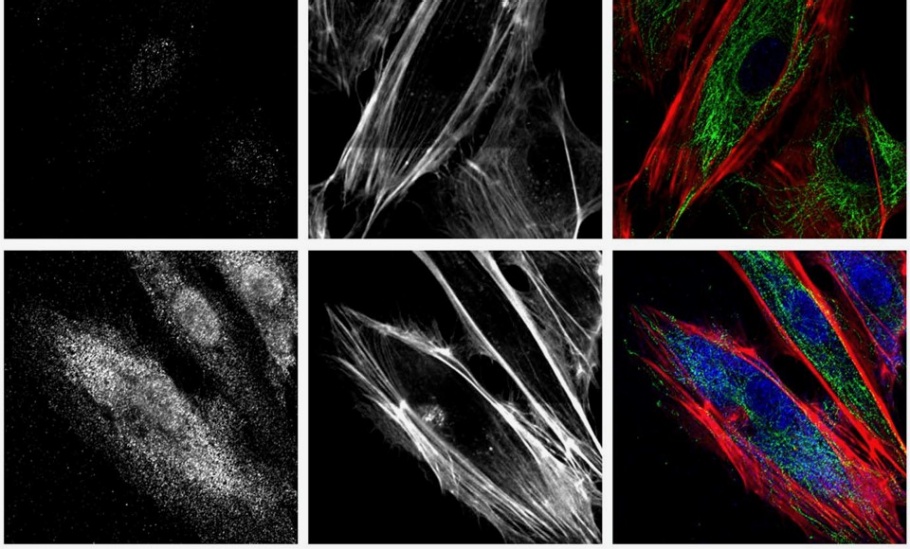
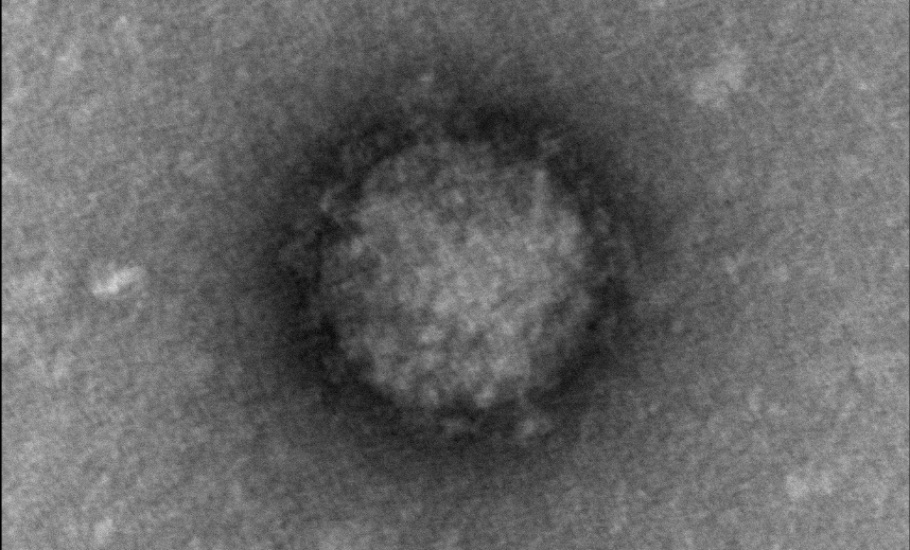
I am collaborating with Dr. Gary Faulkner in a project aimed at studying the developmental cycle of L. pneumophila at the ultrastructural level. We are using mammalian cells, amoeba and ciliates, to follow the morphological changes that characterize the differentiation process of L. pneumophila. In addition, we are in the process of identifying and characterizing developmentally regulated genes and gene products. We have identified a protein that we named MagA, which is preferentially synthesized during intracellular differentiation of L. pneumophila into a cyst-like, highly infectious form of L. pneumophila that we have named the mature intracellular form (MIF). The expression of MagA under many different environmental conditions is being used as a reporter of L. pneumophila differentiation into MIFs, and as a tool to screen mutants unable to differentiate.
L. pneumophila development and the transmission of Legionnaires’ disease.
The MIF is the most infectious form of L. pneumophila. MIFs are readily produced in freshwater and soil, where L. pneumophila grows in amoeba. However, MIFs are inconspicuous when L. pneumophila grows in macrophages, which are the primary target cells during human infection. This fact could explain, at least in part, why Legionnaires’ disease is an environmental disease that cannot be transmitted from human to human. Another explanation is the formation of complex infectious units in water, as the result of the interaction of L. pneumophila with amoebae and ciliates. These protozoa have the ability to package legionellae into spherical pellets containing numerous live legionellae. Ciliates in particular are very efficient packagers of bacteria. This video clip is courtesy of Dr. Sharon Berk and you will require QuickTime Reader to see it. These pellets are of respirable size and are infectious to macrophages and other mammalian cells. We have also determined that these pellets are more resistant to desiccation than free legionellae. Therefore, the differentiation of L. pneumophila into MIFs, the specific response of L. pneumophila to the water environment, and the protozoa-mediated packaging of L. pneumophila into pellets, are 3 environmental events (not present in the human host), which may explain why Legionnaires’ disease is not communicable.
The Legionella research has the potential to (i) advance general knowledge about the biology of intracellular pathogens, (ii) foster new avenues of research in microbial pathogenesis, and (iii) lead to novel measures to control the spread of Legionnaires' disease that continues to be an important public health concern.
The Listeria research project
Listeria as a foodborne pathogen
The bacterium Listeria monocytogenes is a food-borne human pathogen that causes gastroenteritis and (or) human listeriosis, a serious, often fatal, systemic infection. Since L. monocytogenes is commonly present in both natural environments where food is grown (e.g. soil) and food processing plants, it is surprising to find that human listeriosis is naturally infrequent. However, in spite of modern sanitation, better control of quality, and stringent legislation, epidemic outbreaks of listeriosis continue to occur around the world. It has been assumed that epidemic strains of L. monocytogenes must be rare and different from both environmental strains (the ones commonly found in nature, food plants, and food products) and pathogenic strains involved in isolated cases of community-acquired listeriosis. While detection of epidemic strains of L. monocytogenes is highly desirable, currently there are no established markers of virulence that would reliably distinguish environmental from epidemic strains of Listeria
In vivo research
This is based on the working hypothesis that epidemic strains of L. monocytogenes differ from environmental strains, or even from pathogenic strains involved in sporadic cases of listeriosis, by traits that are only expressed or apparent in vivo, i.e. in the animal host. The specific objectives of my research are, therefore, to 1) identify virulence factors of L. monocytogenes that could be relevant for growth and survival in vivo, and 2) provide a basic in vivo technology to systematically study differences between epidemic and environmental strains of L. monocytogenes. We have developed a diffusion chamber model to grow L. monocytogenes in the peritoneal cavity of rats. Most of the in vivo work is based upon the invention of in vivo co-culture technology (IVCOT) in which host cells freshly harvested from an experimental animal are mixed with L. monocytogenes inside a diffusion chamber, which is then surgically implanted in the peritoneal cavity of the animal from which the cells were harvested. IVCOT allows the study of host cell-pathogen interactions in a contained in vivo environment. By applying IVCOT I expect to advance knowledge on the pathogenesis of epidemic listeriosis, and identify potential molecular, physiological and or structural differences between epidemic and environmental strains of L. monocytogenes.
Protamine research
In collaboration with Dr. Tom Gill, we are using the polycationic peptide protamine as a tool to probe the cell surface of L. monocytogenes and explore inverse fitness-virulence relationships. Protamine causes defined changes on the surface of L. monocytogenes and protamine-resistant mutants of L. monocytogenes have altered cell surfaces. The characterization of these mutants may lead to the identification of novel surface molecules involved in virulence, or the survival of L. monocytogenes in processed food products. We are building a collection of protamine-resistant mutants and studying the relationship between protamine resistance, surface properties, virulence, and environmental fitness with the objective of identifying “factors" responsible for both survival in defined environmental conditions and attenuation of virulence.
In the long-term, the Listeria project has the potential to (i) identify surface markers that could be used to distinguish epidemic from non-epidemic strains of L. monocytogenes, (ii) impact regulatory decisions regarding food safety in relation to food products contaminated with this pathogen, and (iii) advance knowledge in the pathogenesis of epidemic listeriosis.
Other research projects
Fish pathogens
Pathogenesis studies of the facultative intracellular fish pathogen Aeromonas salmonicida (the causal agent of salmonid furunculosis) were conducted in collaboration with the Institute of Marine Biosciences (IMB), National Research Council of Canada, in Halifax, N.S. We applied IVCOT to study host-pathogen interactions in vivo. The genome of A. salmonicida has been sequenced and annotated at the IMB, and studies were aimed at developing effective vaccines against furunculosis. Additional links and contacts for this area of research are Genomics in Health Initiative (National Research Council of Canada), Dr. Gilles Olivier (Department of Fisheries and Oceans), and Dr. William W. Kay (Microtek International, Saanichton, BC).
Biodegradation of marine toxins
In collaboration with Tom Gill we are studying the metabolic capacity of marine bacteria to breakdown toxins involved in paralytic toxicoses.
|